FOR HEALTHCARE PRACTITIONERS
Beyond the Physical: A Whole-Person Approach to Persistent Pain
What happens when appropriate physical care isn’t the whole answer?
Some people continue experiencing persistent pain despite medical evaluation, physical treatment and rehabilitation.
For some, stress, emotional experiences, pain-related beliefs and nervous-system responses may also play a role.
I’m Aly, founder of Aly Breathe Coaching. I work with people who want to explore these additional dimensions of their experience through deep cognitive, emotional and embodied coaching.
My goal isn’t to replace the care you provide. It’s to explore how we might support the same person from different, complementary perspectives.
On this page, you’ll find published research, outcomes reported in my coaching practice, real client experiences and opportunities to collaborate.
What Does the Research Tell Us About Persistent Pain?
Pain is a real, personal experience influenced by multiple factors.
The International Association for the Study of Pain recognizes that biological, psychological and social factors can all influence pain.
This does not mean pain is imagined, that tissue injury is irrelevant, or that all persistent pain has an emotional cause.
It means that understanding the whole person can be an important part of pain care.
RANDOMIZED CLINICAL TRIAL | JAMA PSYCHIATRY | 2022
66% Pain-Free or Nearly Pain-Free After Pain Reprocessing Therapy
In a randomized trial involving 151 adults with chronic back pain, 66% of participants assigned to Pain Reprocessing Therapy were pain-free or nearly pain-free after treatment.
This compared with 20% in the placebo group and 10% receiving usual care.
Pain Reprocessing Therapy focuses partly on changing beliefs about pain and the perceived threat associated with it.
Why this matters: For appropriately selected people, changing the interpretation of pain signals can influence pain experiences.
SYSTEMATIC REVIEW | BMJ | 2022
Psychological Approaches Can Complement Physiotherapy
A systematic review and network meta-analysis examined 97 randomized trials involving 13,136 people with chronic nonspecific low back pain.
Researchers found that certain psychological interventions, particularly when combined with physiotherapy, improved pain or physical functioning compared with physiotherapy alone.
Why this matters: Physical and psychological approaches need not compete. In appropriate situations, they can complement one another.
LONG-TERM FOLLOW-UP | JAMA PSYCHIATRY | 2025
Looking Beyond Immediate Pain Relief
Researchers followed participants from the original Pain Reprocessing Therapy trial to examine longer-term outcomes.
This follow-up contributes evidence about the durability of improvements in the studied population.
Why this matters: Immediate symptom changes are important, but long-term functioning and durability matter too.
INTERNATIONAL ASSOCIATION FOR THE STUDY OF PAIN | 2020
Pain Is Influenced by Biological, Psychological and Social Factors
The IASP definition recognizes pain as a sensory and emotional experience.
Its accompanying notes acknowledge the influence of biological, psychological and social factors.
Why this matters: A whole-person understanding of pain is consistent with modern pain science and does not require dismissing biomedical care.
These studies examine specific clinical interventions and scientific frameworks. They do not evaluate Aly Breathe Coaching, and their findings should not be interpreted as proof that my coaching produces the same results.
What I’ve Observed in My Coaching Practice
Real people. Different stories. Meaningful reported changes.
My coaching explores emotional, cognitive, embodied and nervous-system patterns that may be connected to physical pain, chronic stress, tension and overwhelm.
Across my pain-focused coaching work, people have reported changes in their symptoms, emotional experiences and everyday functioning.
Reported reduction in chronic back pain during one coaching session.
Reported reduction in pain following coaching, including the immediate session and subsequent follow-up.
Reported partial or complete pain reduction in one session.
The 90% figure reflects the outcomes I’ve observed and recorded in my pain-focused coaching work. It refers to people reporting partial or complete pain reduction during one session, not necessarily permanent pain relief.
These are coaching-practice observations based on client reports, not results from a controlled clinical trial. Individual experiences vary.
Beyond the Numbers: Real Client Experiences
Every person’s experience of pain is different.
These are real people sharing what they noticed through our work together.
Some experienced changes in physical symptoms. Others describe shifts in emotional patterns, everyday functioning and their relationship with their bodies.
Watch their experiences in their own words.
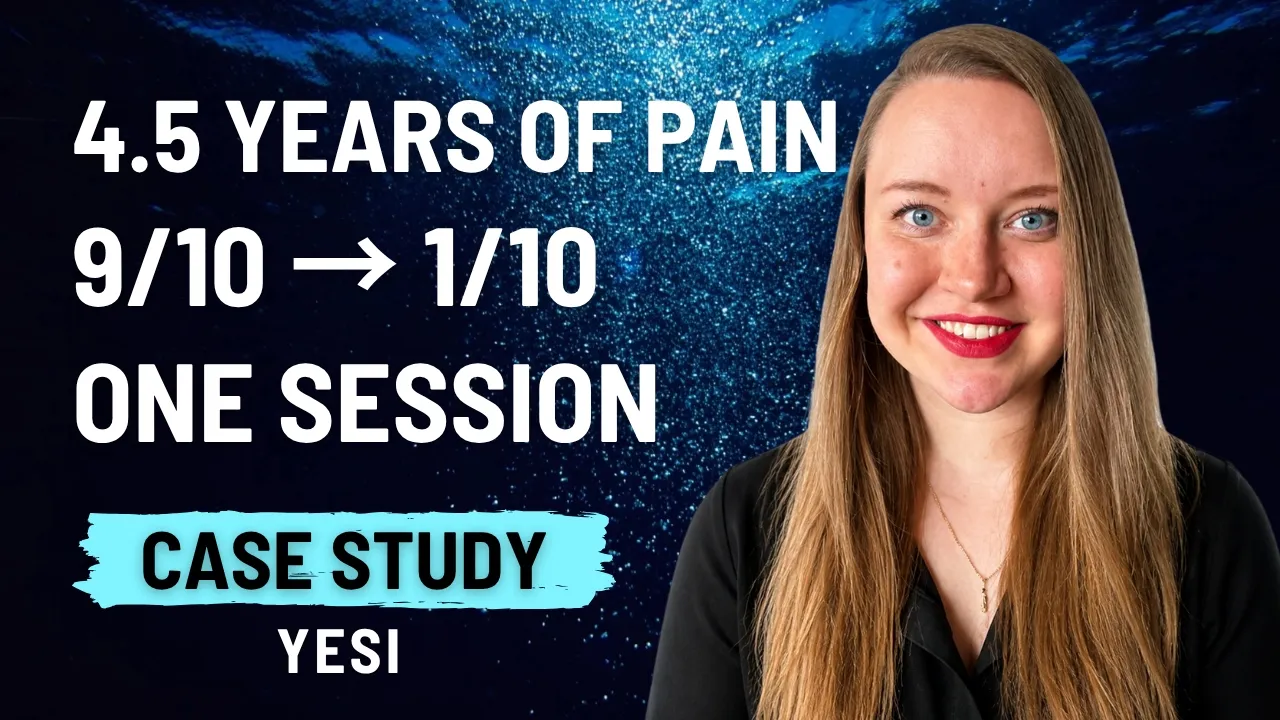
Yesi | Years of Pain and a Major Shift
9/10 → 1/10
Yesi, a TEDx speaker, author and business leader, had experienced pain for years and had already invested substantially in seeking relief.
She reported a significant reduction in pain following our coaching work.
This experience highlights how exploring additional emotional and cognitive dimensions may be meaningful for someone who has already tried other approaches.
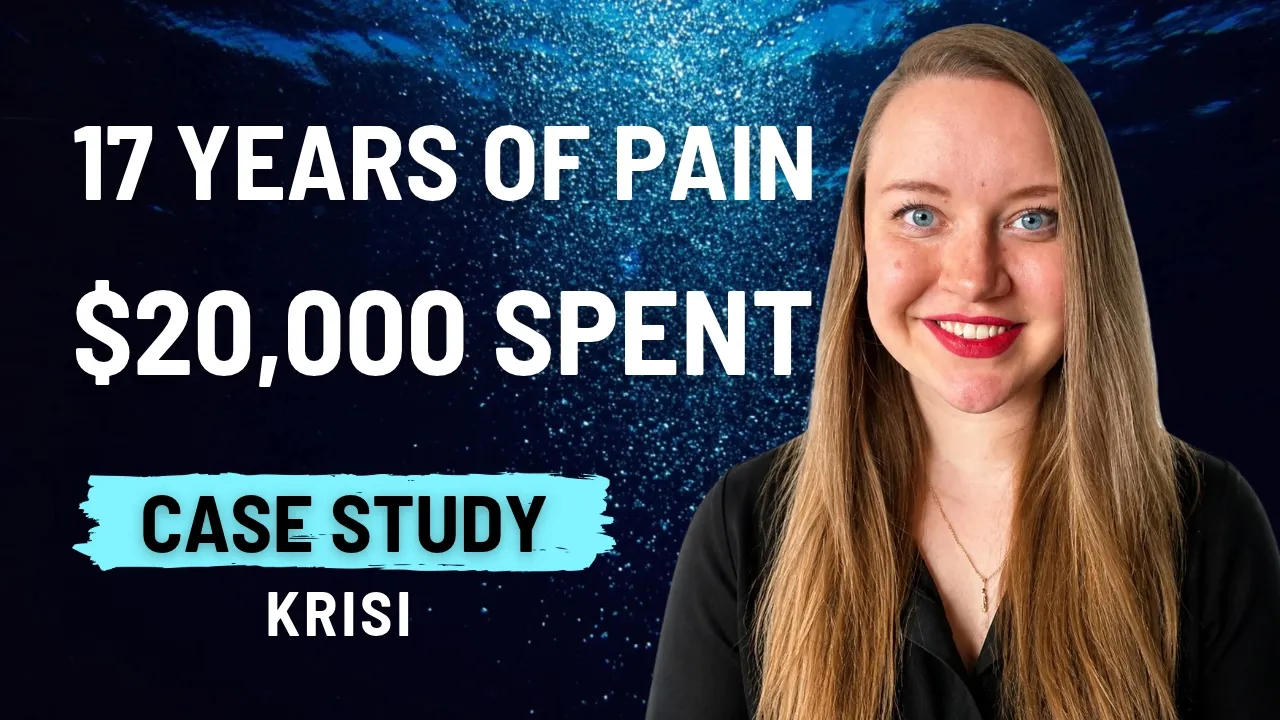
Krisi | 17 Years of Persistent Pain
17 years of pain
Krisi had lived with pain for approximately 17 years and had spent around $20,000 seeking relief.
Through our coaching work, she reported significant changes in her pain experience.
Her story is particularly relevant to conversations about persistent pain that has not fully responded to previous approaches.
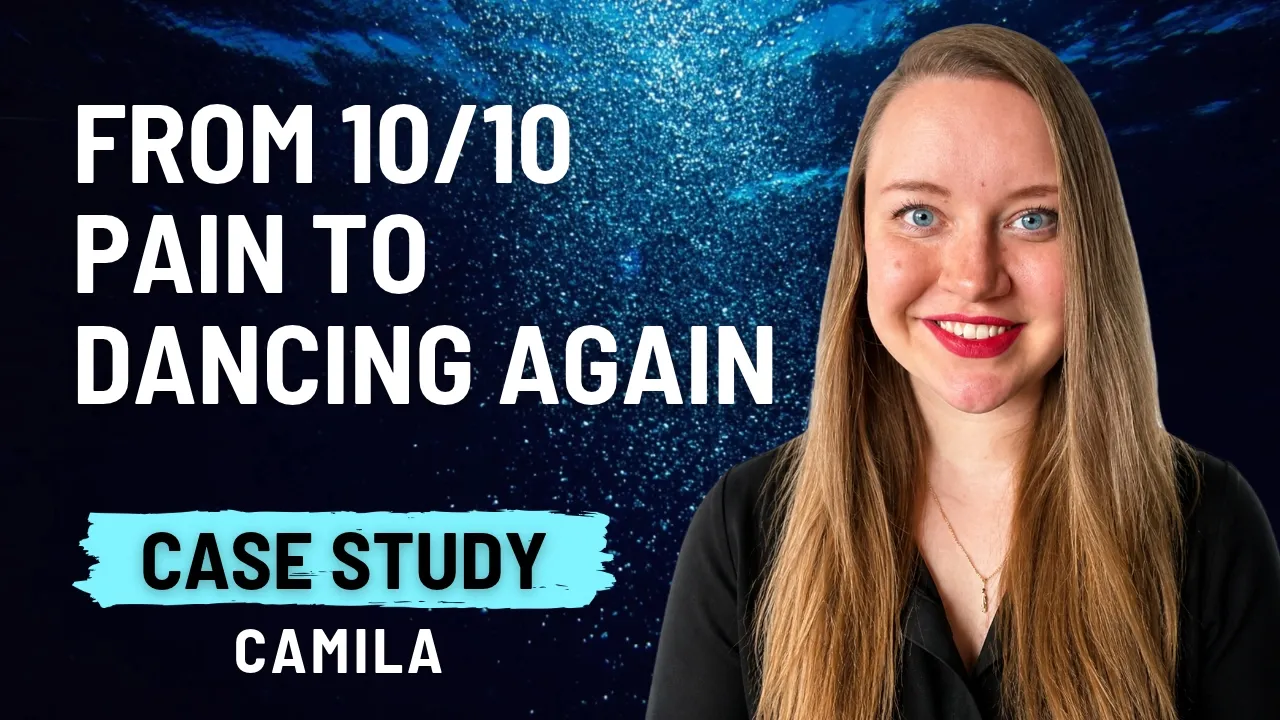
Camila | Reconnecting With Her Body and Everyday Life
From severe discomfort toward greater freedom of movement
Camila shares how her experience of physical discomfort changed through our work together.
Her story explores the connection between emotional patterns, physical sensations and what becomes possible in everyday life when those experiences begin to shift.

Burcu | Looking Beyond the Physical Symptoms
Exploring the emotional dimensions of back pain
Burcu shares her experience of exploring emotional and embodied patterns alongside her physical discomfort.
Her story offers a personal perspective on what it can feel like to approach pain from a different direction.

Nuria | Pain, Pressure and the Demands of Business
7/10 → 1/10
Nuria shares her experience of pain reduction and the connection she noticed between physical discomfort and the pressures she was experiencing in her life and business.
Her story illustrates how pain-related conversations can sometimes reveal patterns beyond the symptoms themselves.
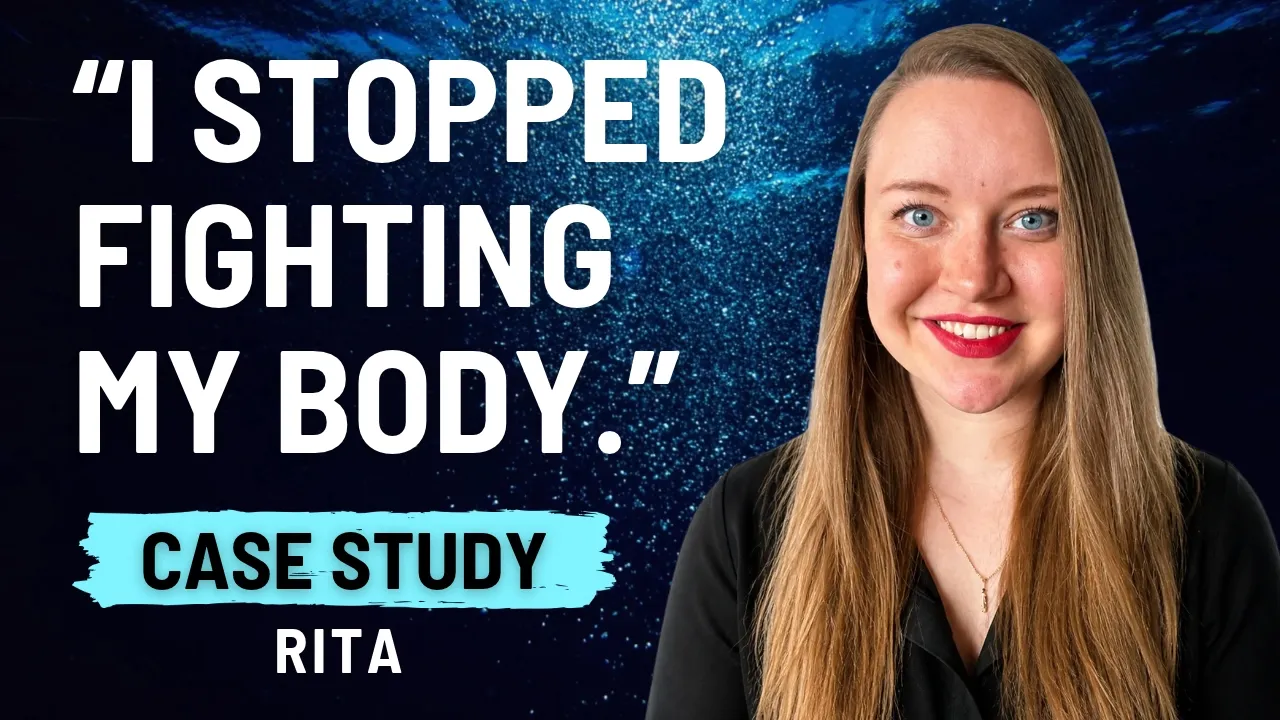
Rita | Learning to Stop Fighting Her Body
A different relationship with pain, tension and her body
Rita shares how our coaching helped her explore deeper emotional and embodied patterns.
Her experience includes changes in how she relates to physical discomfort, how she responds to her body’s signals and how she experiences herself.
These stories represent individual, self-reported experiences. They are not controlled clinical evidence, and the outcomes shown are not guaranteed for other people.
Where My Coaching May Complement Your Work
Your work may involve assessing physical symptoms, identifying medical concerns, supporting rehabilitation and helping people regain function.
My work explores additional aspects of a person’s experience that may be contributing to stress, tension, pain-related distress or how they respond to symptoms.
Areas we may explore
01. Emotional Patterns
Exploring emotions, experiences and responses that may be connected to persistent stress or tension.
02. Pain-Related Beliefs
Exploring fears, expectations, self-judgment and beliefs about the body.
03. Nervous-System Responses
Developing awareness of physical sensations, stress responses and opportunities for regulation.
04. Embodied Processing
Supporting people in noticing and exploring their internal experiences rather than approaching everything through intellectual analysis.
05. Identity and Everyday Life
Exploring how responsibility, perfectionism, fear, relationships and personal expectations may influence a person’s experience.
This is coaching, not medical treatment.
I do not diagnose or treat medical conditions, provide physiotherapy or psychotherapy, or advise people to discontinue prescribed care. My coaching is intended to complement, not replace, appropriate professional support.
How Can We Work Together?
I believe people experiencing persistent pain deserve thoughtful, collaborative support.
I also believe meaningful professional relationships begin with curiosity, mutual respect and understanding one another’s work.
There are several ways we can start.
01. Have a Conversation
Let’s learn about each other’s work.
I’d love to hear what challenges you encounter when working with persistent pain, what approaches you find helpful, and where you see opportunities for better support.
02. Explore My Coaching Process
If you’re curious, we can discuss how my coaching works, review client experiences, or explore whether experiencing the process personally would help you understand it.
There is no expectation that you refer patients.
03. Explore Appropriate Collaboration
If you encounter people who may benefit from complementary coaching support, we can discuss whether sharing resources or making an introduction would be appropriate.
Any introduction should respect patient choice, confidentiality and professional scope.
A Closer Look at How My Coaching Works
His Back Pain Disappeared. Then His Business Ceiling Moved.
Derrick came into our first session dealing with serious lower back pain.
He was using ibuprofen and pain patches, and certain movements immediately triggered discomfort.
We started with his back.
But as the conversation developed, we began exploring much more than a muscle.
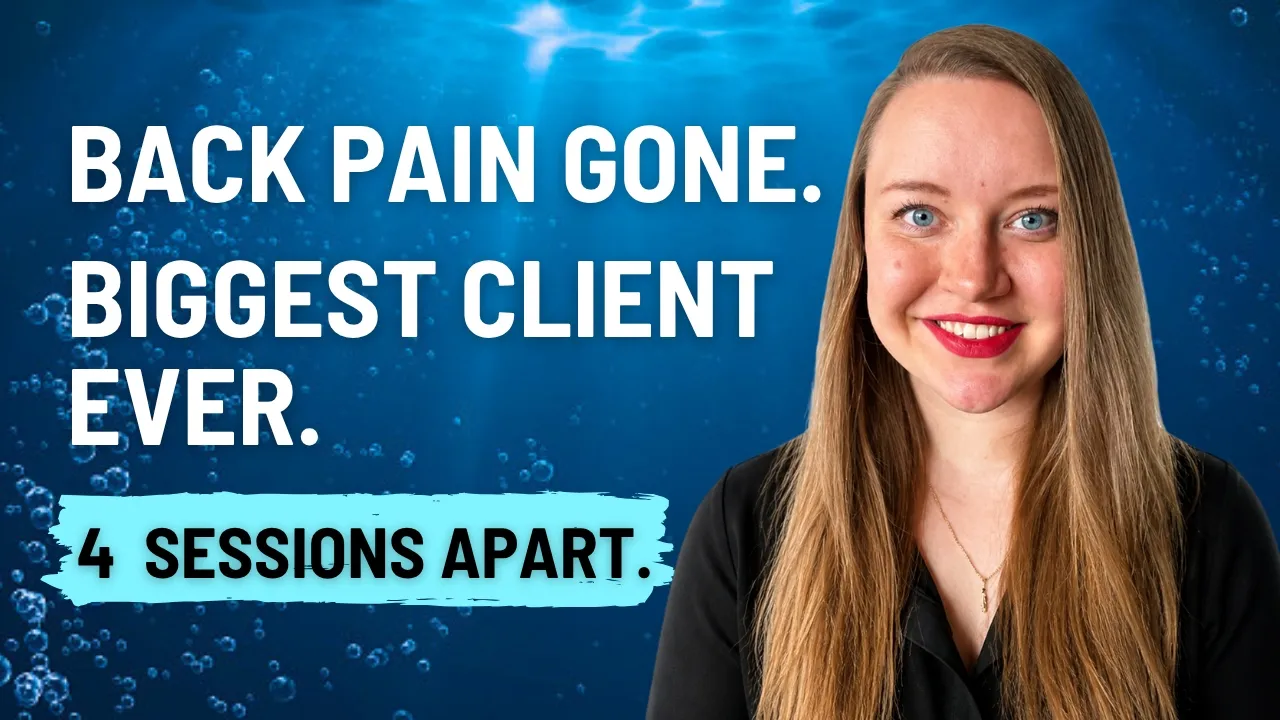
Aly’s Four-Minute Explanation
It Started With Back Pain
Derrick entered our first session with lower back pain that was affecting how he moved.
During our conversation, we explored patterns of avoidance, self-judgment and pushing himself to prove that he was capable.
Underneath those patterns, we uncovered a deeper belief:
“There is something wrong with me.”
By the end of the session, Derrick reported that his pain had decreased from 6/10 to 3/10.
“By that evening, my back was virtually pain-free in one session.”
Four Sessions Later, Something Else Had Changed
Derrick already knew how to coach and build a business.
Our work wasn’t about giving him another business strategy.
We explored how he responded internally to rejection, fear, difficult conversations and the pressure to succeed.
He described becoming less worried, more playful and more able to distinguish facts from fear.
Four sessions into our work, he reported signing both his highest-paying and longest-term client.
HIGHEST-PAYING CLIENT EVER
LONGEST-TERM CLIENT EVER
These outcomes occurred during the same coaching period. This story does not establish that the business outcome was caused by coaching.
Don’t Just Take My Interpretation. Hear It From Derrick.

“With Aly’s support, I landed my highest-paying client and my longest-term client.”
“If you get the chance to work with Aly, take it.”
Derrick’s experience illustrates how a coaching conversation can move between physical discomfort, emotional experiences, beliefs and everyday behavior. It is one person’s experience, not proof that the same process or outcome will apply to everyone.
What Others Say About Working With Me
Physical symptom changes are one part of the picture.
Clients also describe changes in emotional awareness, self-trust, internal pressure and how they respond to challenges.
Jessica describes nearly 20 years of body-based and energy work, following signals in the body, exploring internal blocks, reduced irritation and impatience, and a subsequent business development.

Sherry Winn
Sherry shares her experience of emotional exploration, self-doubt and personal growth. Her testimonial is not presented as a chronic-pain outcome.

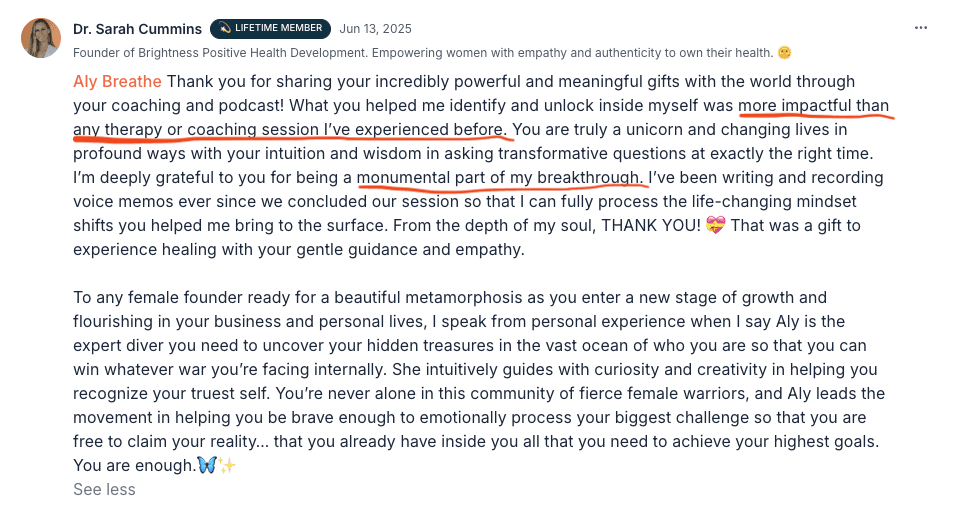
Dr. Sarah Cummins
Sarah describes emotional insights, transformative questions and personal breakthroughs. This is a personal testimonial, not a clinical endorsement or an assessment of pain-treatment efficacy.
The Person Behind Aly Breathe Coaching

I’m Aly, founder of Aly Breathe Coaching.
I’ve coached more than 300 people across health, personal development and business-related challenges.
My work focuses on helping people explore emotional, cognitive, embodied and nervous-system patterns that may be connected to persistent pain, stress and overwhelm.
My background includes training through Exponential Coaching Academy and further education in trauma-informed approaches, root cause therapy and embodied processing.
My approach combines deep inquiry, emotional exploration and embodied awareness.
I value collaboration with licensed healthcare professionals and recognize the importance of working within my professional scope.
My interest in this work is also personal.
Growing up, I struggled with severe stuttering and spent years dealing with self-criticism, pressure and the feeling that something was wrong with me.
Exploring the emotional and embodied dimensions of those experiences changed how I understood myself.
That journey became part of the foundation for the work I do today.
Additional Perspectives Worth Exploring
The following authors and approaches have contributed to conversations about persistent pain, emotional awareness and the mind-body connection.
They are provided as educational resources, not as proof that every theory or intervention is scientifically established.
Mind Your Body and The Cure for Chronic Pain podcast.
Exploring emotional awareness, chronic symptoms and the mind-body relationship.
Healing Back Pain and writings on tension myositis syndrome.
Pain Reprocessing Therapy
Research exploring how pain-related beliefs, perceived threat and interpretation of bodily signals may influence chronic primary back pain.
Let’s Explore What’s Possible Together
If you’re curious about my work, have questions about the client experiences shared here, or would like to explore collaboration, I’d welcome a conversation.
I’d love to learn more about your approach to persistent pain, the challenges you encounter and where our work might complement one another.