FOR PEOPLE LIVING WITH PERSISTENT PAIN
You've tried so much. What if there's another piece to explore?
What happens when appropriate physical care isn’t the whole answer?
You've seen doctors. Tried treatments. Followed recommendations.
Maybe some things helped. Maybe nothing lasted.
And you're still living with pain.
Your pain is real. And there may be more contributing to it than you've explored so far.
I help people explore how stress, emotions, beliefs, and nervous system patterns may be influencing their experience of pain.
Not by ignoring the physical side.
By exploring another side of the experience, alongside appropriate medical care.
There's Science Behind the Mind-Body Connection.
Pain isn't always a simple reflection of what's happening in one part of your body.
Research shows that pain can be influenced by biological, psychological and social factors, including how the brain and nervous system process signals.
This doesn't mean your pain is imaginary.
It doesn't mean you're creating it.
And it doesn't mean you can simply think it away.
It means that sometimes, there is another part of the experience worth exploring.
Here are a few scientific studies that help explain why the mind-body connection matters.
RANDOMIZED CLINICAL TRIAL | JAMA PSYCHIATRY | 2022
66% Were Pain-Free or Nearly Pain-Free
In a clinical study involving 151 adults with chronic back pain, 66% of people who received Pain Reprocessing Therapy became pain-free or nearly pain-free after treatment.
This approach helps people change how they understand and respond to pain signals.
Why it matters: For some people, changing how the brain interprets pain can make a meaningful difference.
SYSTEMATIC REVIEW | BMJ | 2022
Physical and Psychological Approaches Can Work Together
A review of 97 clinical trials involving more than 13,000 people with chronic lower back pain found that certain psychological approaches, when combined with physiotherapy, can improve pain or physical functioning.
Why it matters: You don't necessarily have to choose between physical treatment and exploring the emotional or psychological dimensions of pain.
LONG-TERM FOLLOW-UP | JAMA PSYCHIATRY | 2025
Can Changes in Pain Last?
Researchers followed participants from the original Pain Reprocessing Therapy study over several years to better understand longer-term outcomes.
The follow-up provides additional evidence about how improvements can persist for some people.
Why it matters: It's not just about feeling different during a session. What happens afterward matters too.
INTERNATIONAL ASSOCIATION FOR THE STUDY OF PAIN | 2020
Your Pain Is Real, And It's Complex
The International Association for the Study of Pain recognizes that pain is influenced by biological, psychological and social factors.
Why it matters: Understanding pain may involve looking beyond one part of the body, without dismissing physical causes or the importance of medical care.
These studies explore specific clinical approaches and pain science. They do not test Aly Breathe Coaching or guarantee that my clients will experience the same outcomes.
What Has Happened for People I've Worked With?
Real people. Real experiences. Different outcomes.
I've worked with people experiencing persistent pain, tension and stress, many of whom had already tried different approaches to find relief.
Here are some of the changes they've reported through our coaching work.
Reported reduction in chronic back pain during one coaching session.
Reported reduction in pain following coaching, including the immediate session and subsequent follow-up.
Reported partial or complete pain reduction in one session.
The 90% figure reflects outcomes I've observed and recorded in my pain-focused coaching work. It refers to initial, self-reported pain reduction, not a guarantee of permanent relief. Individual experiences vary.
They Were Living With Pain, Too.
Different people. Different stories. Different experiences.
Some had lived with pain for years. Some had spent thousands of dollars looking for answers.
Here are their experiences of exploring pain, emotions and their bodies through coaching.
Hear what changed for them, in their own words.
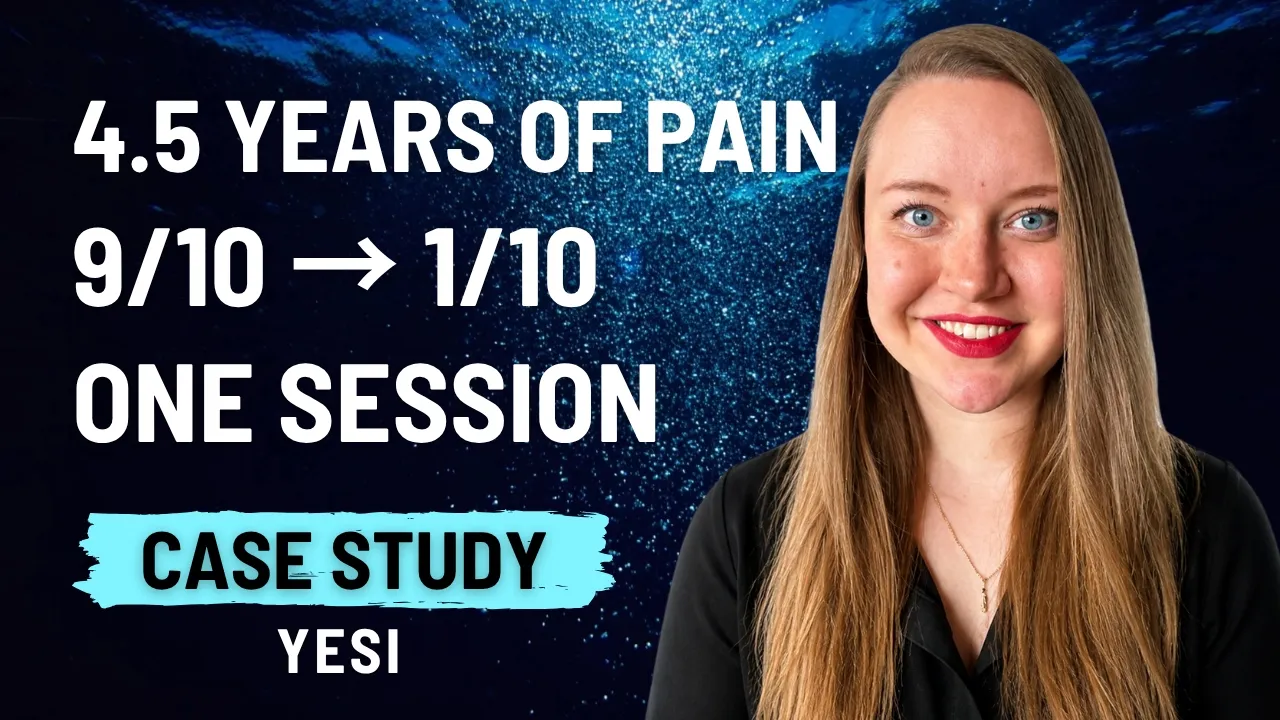
Yesi | Years of Pain and a Major Shift
9/10 → 1/10
After years of pain and spending thousands of dollars seeking relief, Yesi, a TEDx speaker, author and business leader, reported a significant reduction in pain through our work together.
Hear her describe what she experienced.
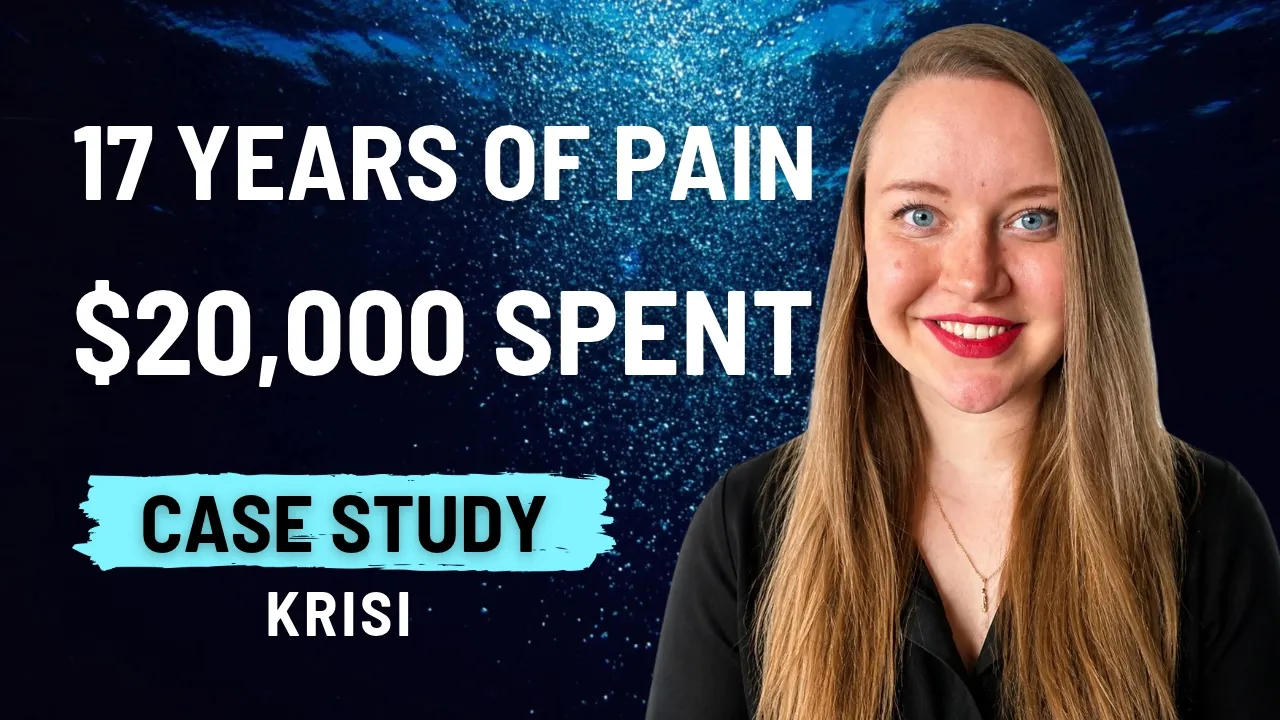
Krisi | 17 Years of Persistent Pain
17 years of pain. Approximately $20,000 spent seeking relief.
Krisi had spent years looking for answers.
Her story explores what happened when we began working with emotional and embodied patterns alongside her experience of physical pain.
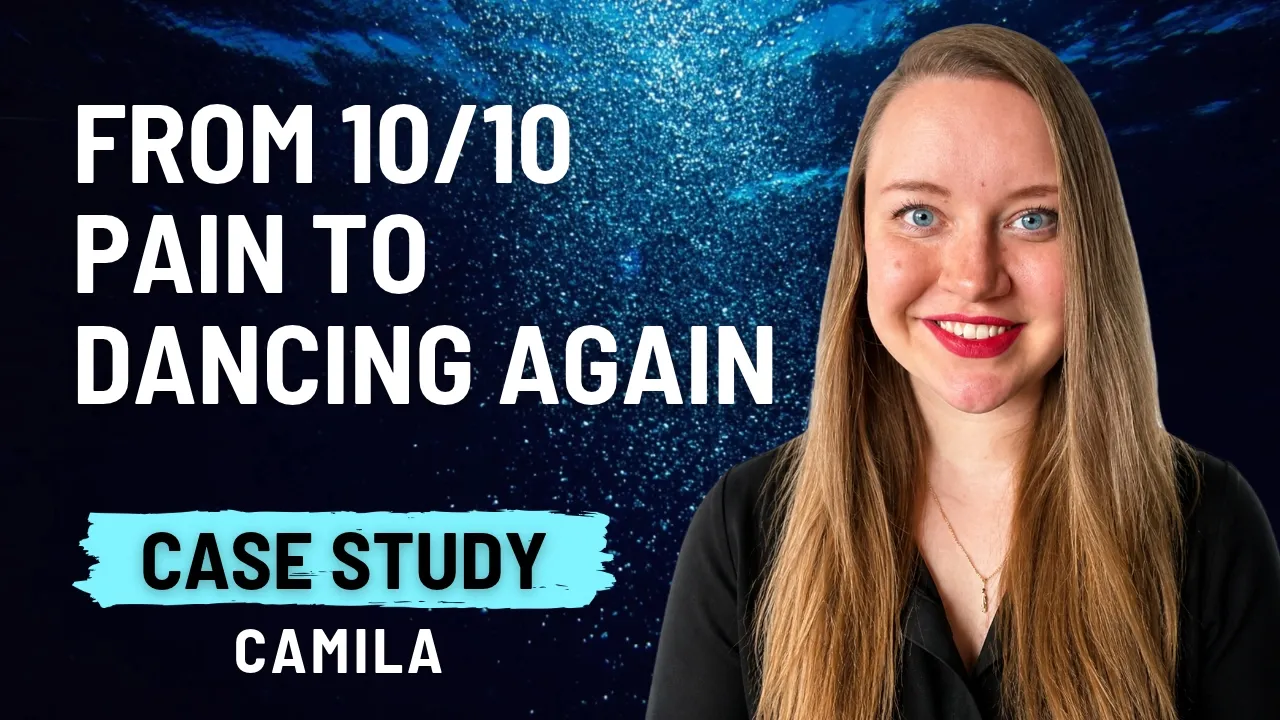
Camila | From Severe Pain to Dancing Again
Pain had been affecting Camila's everyday life.
Through our coaching, she began experiencing changes in her physical discomfort and her relationship with her body.

Burcu | When Physical Approaches Weren't Enough
Burcu had been struggling with back pain.
In our work together, we explored emotional experiences and patterns that she hadn't previously connected with her physical discomfort.

Nuria | Pain, Pressure and Letting Go
7/10 → 1/10
Nuria was carrying significant pressure in her life and business.
She describes how exploring that pressure through coaching coincided with changes in her pain and how she responded to challenges.
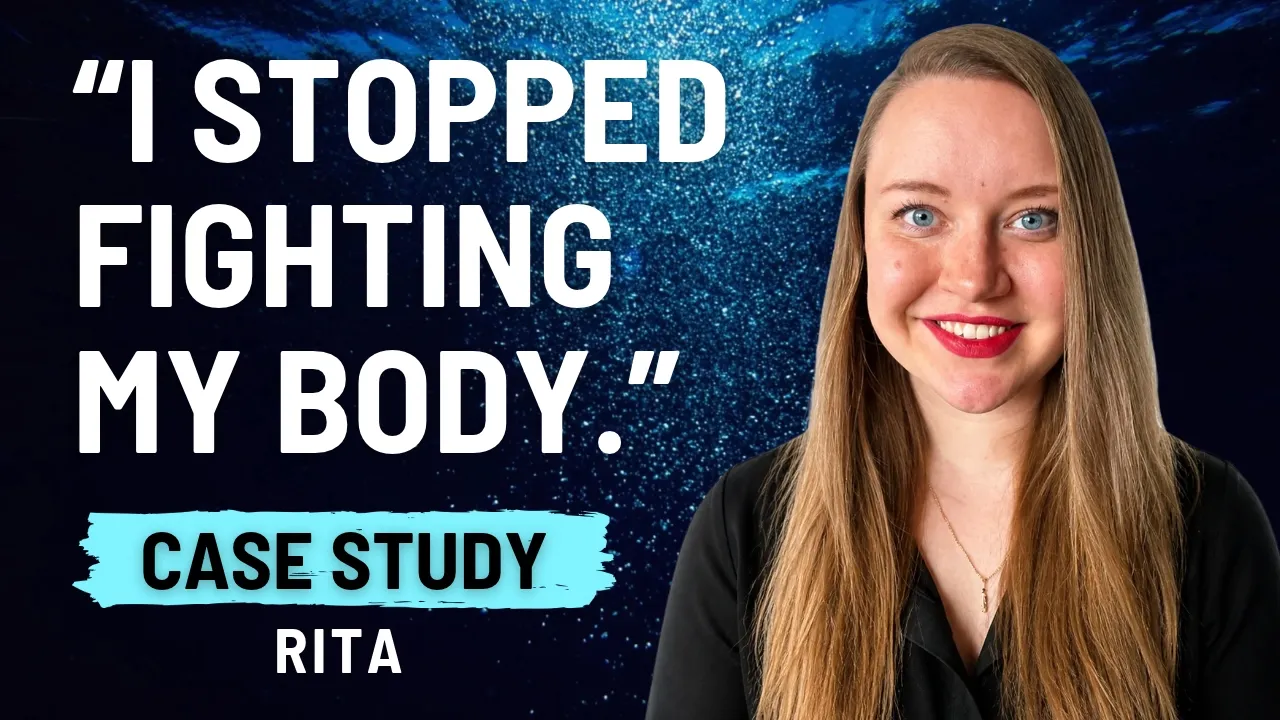
Rita | I Stopped Fighting My Body
What if your relationship with your body could change?
Rita shares how exploring emotional and embodied patterns helped her relate differently to her body, her physical discomfort and herself.
What Do We Actually Explore in Coaching?
This isn't about telling you to think positively, ignore your symptoms or pretend everything is fine.
It's about creating space to explore experiences and patterns that may be connected to your pain, tension and stress.
Emotions You May Have Been Carrying
We explore emotional experiences and patterns that may be contributing to ongoing stress or tension.
02. Beliefs About Yourself and Your Body
We explore fear, self-judgment, expectations and the stories you may have developed about yourself or your pain.
03. Your Nervous System's Responses
We develop awareness of physical sensations, stress responses and ways of relating to them differently.
04. What You Experience in Your Body
Rather than analyzing everything intellectually, we also explore what you're noticing and experiencing physically and emotionally in the moment.
05. Patterns in Your Everyday Life
We may explore pressure, perfectionism, responsibility, relationships and other patterns that affect how you experience life.
This is coaching, not medical treatment.
I do not diagnose or treat medical conditions, provide physiotherapy or psychotherapy, or advise people to discontinue prescribed care. My coaching is intended to complement, not replace, appropriate professional support.
How Can You Get Started?
You don't need to commit to a coaching program to explore whether this work might be right for you. We start with a conversation.
01. Book a Free Discovery Call
We'll talk about what you've been experiencing, what you've already tried and what you'd love to change.
This is a 30-minute conversation, not a full coaching session.
02. Explore Whether We're a Fit
If we both feel that coaching could be appropriate, I'll explain how I work and answer your questions.
03. Decide What Feels Right
You can choose whether to book a private session or explore longer-term coaching.
There's no obligation to continue after our discovery call.
What Actually Happens During Coaching?
Derrick Came in With Back Pain.
But Our Conversation Went Much Deeper.
Derrick was experiencing significant lower-back pain.
He was using ibuprofen and pain patches, and certain movements triggered discomfort.
During our first session, we explored what was happening emotionally and mentally beneath the physical experience.
We uncovered patterns of pressure, self-judgment and the belief that something was wrong with him.
His reported pain went from 6/10 to 3/10 during our session.
By that evening, he described his back as virtually pain-free.
Watch Me Explain What We Explored
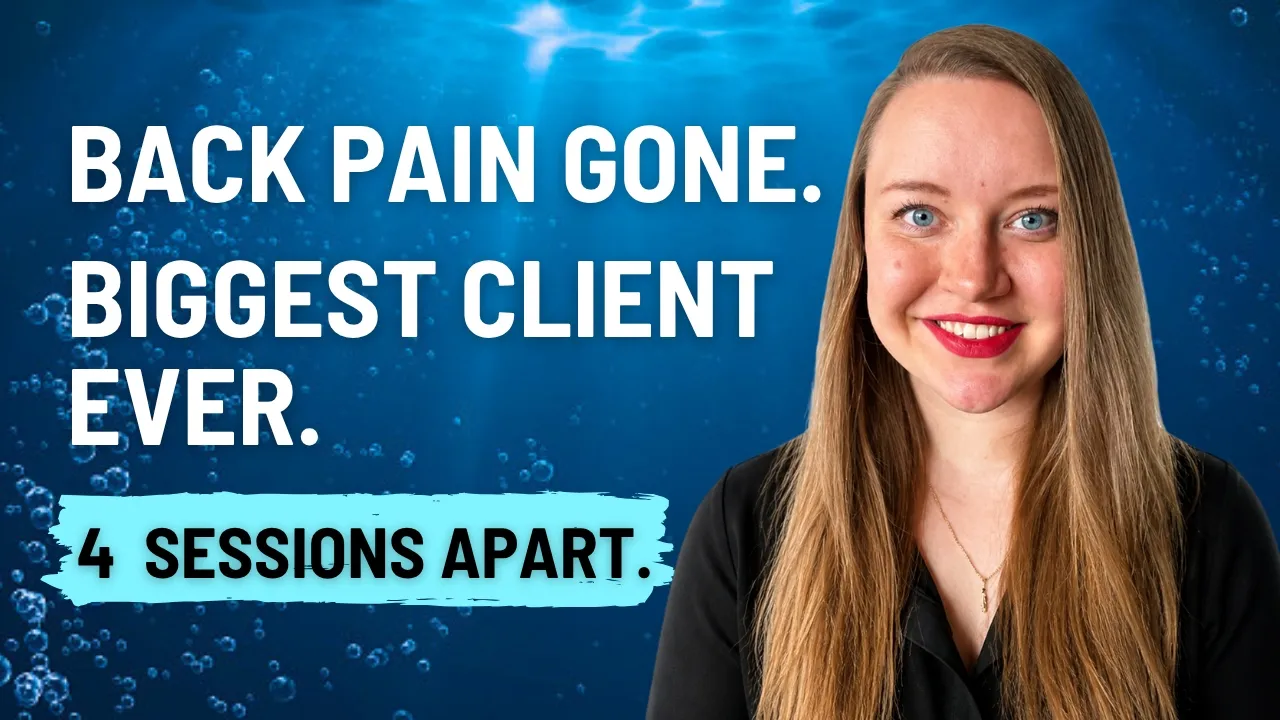
What Changed Beyond His Back Pain?
Over the following sessions, Derrick explored how fear, rejection and pressure were affecting his everyday life.
Four sessions into our work, he reported signing his highest-paying and longest-term client.
That business outcome occurred during the same coaching period; we cannot establish that coaching caused it.
Hear Derrick Describe His Experience

“With Aly’s support, I landed my highest-paying client and my longest-term client.”
“If you get the chance to work with Aly, take it.”
Every person's experience is different. Derrick's story is an individual example, not a guarantee of what will happen for someone else.
The Changes Go Beyond Physical Pain.
Sometimes the most meaningful shifts aren't only about symptoms.
People also describe feeling more connected to themselves, understanding their emotional patterns and responding differently to everyday challenges.
Here are a few more experiences from people I've coached.
Jessica describes nearly 20 years of body-based and energy work, following signals in the body, exploring internal blocks, reduced irritation and impatience, and a subsequent business development.

Sherry Winn
Sherry shares her experience of emotional exploration, self-doubt and personal growth. Her testimonial is not presented as a chronic-pain outcome.

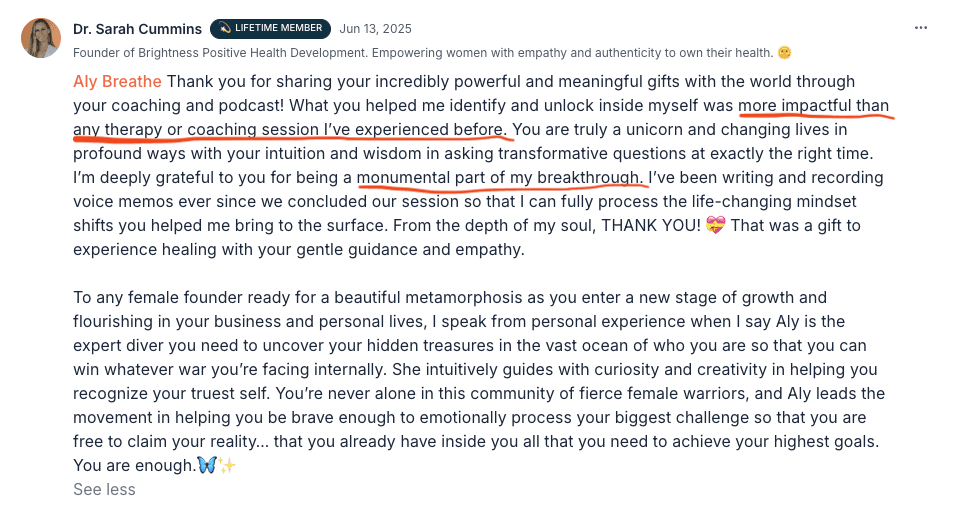
Dr. Sarah Cummins
Sarah describes emotional insights, transformative questions and personal breakthroughs. This is a personal testimonial, not a clinical endorsement or an assessment of pain-treatment efficacy.
Hi, I'm Aly.

I'm the founder of Aly Breathe Coaching.
I've coached more than 300 people across health, personal development and business-related challenges.
My work focuses on helping people explore emotional, cognitive and embodied patterns that may be connected to persistent pain, tension, stress and overwhelm.
My background includes training through Exponential Coaching Academy and further education in trauma-informed approaches, root cause therapy and embodied processing.
My interest in this work is also personal.
Growing up, I struggled with severe stuttering and spent years experiencing self-criticism, pressure and the feeling that something was wrong with me.
Exploring the emotional and embodied dimensions of those experiences changed how I understood myself.
Today, I create space for others to explore their experiences with curiosity, compassion and without the expectation that they need to fix themselves.
My coaching is not medical treatment or psychotherapy, and I value working alongside appropriate professional care.
Curious to Learn More About the Mind-Body Connection?
You don't have to take my word for it.
If you're interested in exploring different perspectives on persistent pain, emotional awareness and the mind-body connection, here are a few resources worth looking into.
These resources offer educational perspectives. Not every theory or approach has the same level of scientific evidence.
Mind Your Body and The Cure for Chronic Pain podcast.
Exploring emotional awareness, chronic symptoms and the mind-body relationship.
Healing Back Pain and writings on tension myositis syndrome.
Pain Reprocessing Therapy
Research exploring how pain-related beliefs, perceived threat and interpretation of bodily signals may influence chronic primary back pain.
What If There's Another Piece Worth Exploring?
You don't need to know whether this approach will work for you before we speak.
You don't need to convince me that your pain is real.
And you don't need to commit to a coaching program.
We can start with a conversation.
Tell me what's been happening, what you've already tried and what you'd love to change.
Let's explore whether coaching might be an appropriate next step.
Referred by a healthcare practitioner? Please, mention their name when booking.